
Biblical Background of Spiritual Meaning of Colors in the Bible
Understanding the spiritual meaning of colors in the Bible begins with recognizing that God intentionally used colors throughout Scripture to teach spiritual truths. From the Old Testament tabernacle to the visions recorded in Revelation, colors helped communicate God’s holiness, covenant relationship, and redemptive plan.
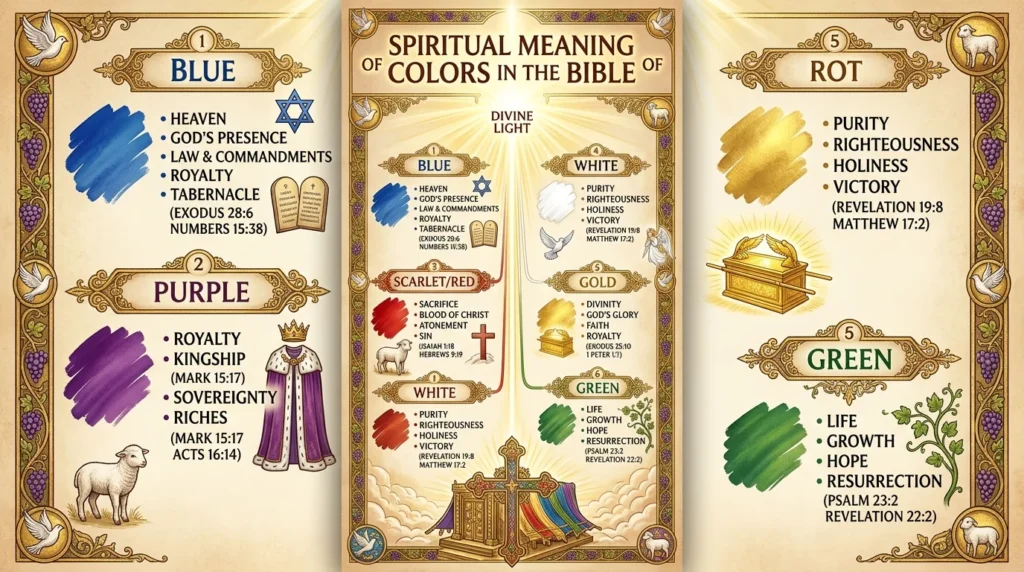
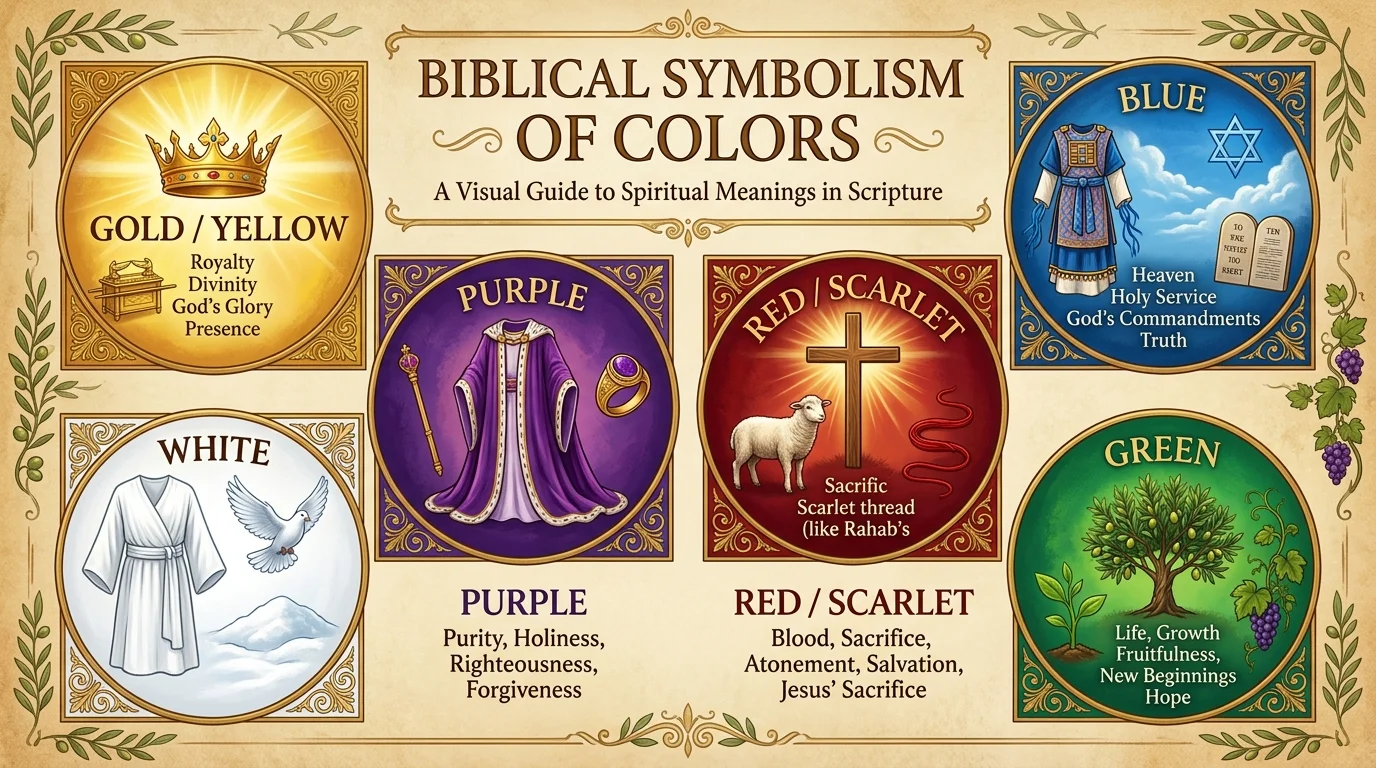
One of the clearest examples appears in Exodus 26, where God instructed Moses to use blue, purple, and scarlet yarn in the curtains of the tabernacle. These colors were not chosen randomly. They reflected God’s majesty, His holiness, and the coming work of the Messiah.
The high priest’s garments described in Exodus 28 also included blue, purple, scarlet, and fine white linen. Every detail pointed Israel toward God’s presence and the need for holiness.
In the New Testament, colors continue to carry symbolic significance. Revelation 19:8 describes the Bride of Christ clothed in fine white linen, representing the righteous acts of God’s people. Meanwhile, Isaiah 1:18 contrasts scarlet sins with the promise that God can make His people “white as snow” through His forgiveness.
Although these examples reveal meaningful symbolism, Scripture never encourages believers to treat colors as magical signs or sources of spiritual power. Instead, biblical colors consistently direct our attention to God’s holiness, grace, and eternal kingdom.
Key References From Core Bible Books
Exodus: Colors Reveal God’s Holiness
Exodus 26:1 and Exodus 28:5–6 describe the blue, purple, scarlet, and white materials used in the tabernacle and priestly garments. These colors reflected God’s holiness and His desire to dwell among His people.
Isaiah: God’s Grace Brings Cleansing
Isaiah 1:18 declares, “Though your sins are like scarlet, they shall be as white as snow.” Isaiah uses color to illustrate the transforming power of God’s forgiveness.
Psalms: God Is Clothed in Majesty
Psalm 104:1–2 describes God’s greatness using vivid imagery of light and glory. While not assigning meanings to every color, this passage reminds believers that beauty in creation reflects God’s splendor.
John: Jesus Is the Light of the World
In John 8:12, Jesus says, “I am the light of the world.” Light throughout Scripture symbolizes truth, life, and the presence of God overcoming darkness.
Revelation: The Glory of God’s Kingdom
Revelation 19:8 and Revelation 21:18–21 use brilliant colors, precious stones, and radiant light to describe the beauty and holiness of God’s eternal kingdom.
Spiritual Interpretations
1. White Represents Purity and Righteousness
“Though your sins are like scarlet, they shall be as white as snow.” — Isaiah 1:18 (NIV)
White frequently symbolizes cleansing, holiness, and forgiveness in Scripture. Through Jesus Christ, believers are washed clean from sin and clothed in His righteousness. This reminds Christians that salvation comes by God’s grace alone.
2. Blue Reminds Us of Heaven and Obedience
“These will be the tassels for you to look at and so you will remember all the commands of the Lord.” — Numbers 15:39 (NIV)
Blue appeared in the tabernacle and in the tassels worn by Israel. It reminded God’s people to remember His commandments and live in faithful obedience. Today, believers are called to keep their hearts focused on God’s truth.
3. Purple Points to Royalty and the Kingship of Christ
“They clothed him in a purple robe…” — Mark 15:17 (NIV)
Purple was associated with royalty and honor. Although soldiers mockingly dressed Jesus in purple before His crucifixion, He truly is the King of kings. This color reminds Christians of Christ’s authority and eternal reign.
4. Scarlet Reveals Both Sin and Redemption
“Though your sins are like scarlet…” — Isaiah 1:18 (NIV)
Scarlet often represents sin, sacrifice, and the shedding of blood. Through the sacrifice of Jesus on the cross, our scarlet sins are forgiven. God’s mercy transforms guilty sinners into His beloved children.
Variations & Related Themes
Gold in Scripture frequently symbolizes God’s glory, purity, and divine kingship. The streets of the New Jerusalem are described as pure gold, reflecting the perfection of God’s eternal kingdom.
Green often reminds believers of life, growth, and God’s faithful provision. Passages such as Psalm 23 describe green pastures as places of rest and care under the Good Shepherd.
Red is connected with both sacrifice and redemption because it reminds believers of the precious blood of Christ, through which salvation was accomplished.
The Bible consistently teaches that colors are meaningful only because they point us toward God’s truth—not because they possess spiritual power themselves.
Faith-Based Action Steps
1. Pray for Spiritual Understanding
Heavenly Father, thank You for revealing Your truth throughout Scripture. Help me understand every biblical symbol according to Your Word rather than human traditions. Teach me to focus on Jesus Christ, whose life, death, and resurrection reveal Your perfect plan of salvation. Fill my heart with wisdom and faith as I continue to study Your Word. In Jesus’ name, Amen.
2. Study Biblical Symbols in Context
Read Exodus 26–28, Isaiah 1, and Revelation 19–21 this week. Notice how colors consistently point toward God’s holiness, grace, and eternal kingdom.
3. Grow in Christian Fellowship
Join a Bible study or small group where you can learn Scripture alongside mature believers. Studying God’s Word in community helps prevent misunderstandings and deepens your faith.